

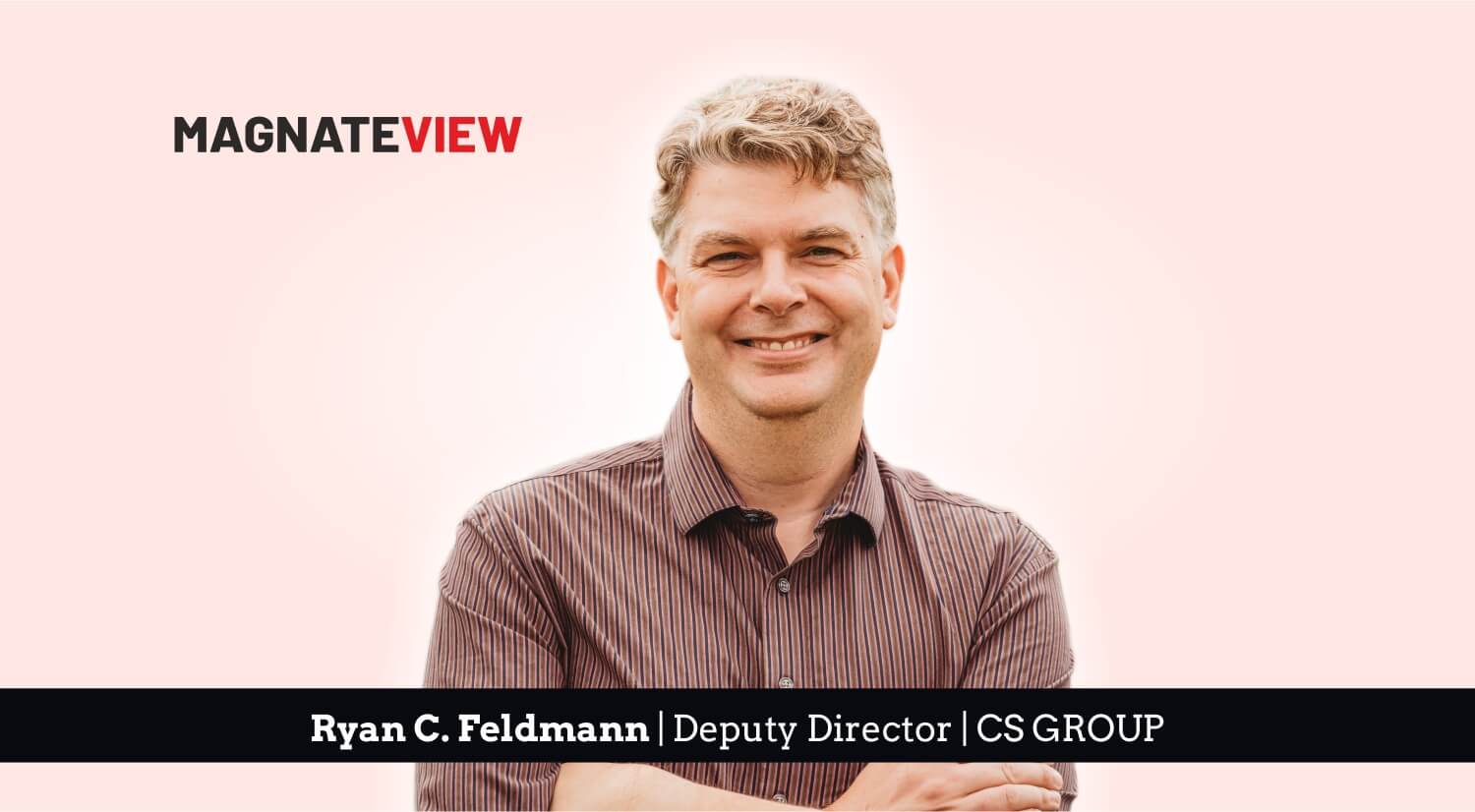

In this exclusive feature, we explore the remarkable journey of Ryan C. Feldmann, Deputy Director of CS GROUP, whose career is a testament to perseverance, integrity, and the transformative power of leadership. From humble beginnings on a local farm to becoming one of the most respected leaders in his field, Ryan’s path exemplifies resilience, hard work, and a dedication to continuous improvement. Join us as Ryan shares his story, the challenges that shaped his leadership style, the values that guide his decisions, and the innovations that continue to drive his success.
The Journey from a Farm Kid to a Deputy Director
Ryan C. Feldmann’s professional journey began in a small rural community where he grew up as a farm kid with dreams that extended far beyond the fields. Determined to create a different future, he pursued an Associate’s Degree in Computer Science at a local technical college, avoiding the financial burden of a four-year university. Battling a minor reading disability and self-doubt about his academic potential, Ryan’s decision was rooted in practicality and perseverance.
His first job offer came from an aviation company—a field he knew nothing about—but he accepted the opportunity to stay local. The early years were difficult. Supervisors doubted his capabilities due to his two-year degree, assigning him only basic tasks. Within months, he lost his engineering title. However, a turning point came when Ryan repeatedly stepped up to save projects from missing delivery deadlines. Working double and sometimes triple shifts, he completed a mountains of work, earning the attention and respect of his managers. From there, he began to rise.
With every new assignment, Ryan proved his worth. On his third program, he outperformed 81% of the staff, many of whom were his seniors. When leadership opportunities arose, Ryan stepped up, even when others hesitated. His reorganization of a struggling project set new company standards. Despite facing challenges as a young leader managing older, more experienced professionals, Ryan persisted. Balancing his work and family life, he returned to school to earn his Bachelor’s Degree in Business while maintaining a demanding workload—solidifying his foundation for future leadership.
Defining Challenges That Shaped His Leadership Path
Ryan’s leadership journey was marked by both triumph and adversity. One defining challenge came after twelve years of relentless dedication—years that he later realized were both his greatest learning experience and his hardest lesson. Throughout this period, he encountered three managers—Scot, Mitch, and Paul—who had profound but contrasting influences on his career.
For eight years, Ryan worked tirelessly under Mitch, regularly logging 50 to 60 hours a week and leading large, complex programs. His dedication was unwavering, and his performance reviews were flawless. However, when a new manager named Scott arrived, things took a dark turn. Scott assigned impossible tasks and attempted to undermine Ryan, resulting in immense stress and health issues. Despite appealing to HR and Mitch for relief, Ryan was warned that failure to comply could have consequences.
It was only through the support of another manager, Paul, that Ryan found stability again. But even after years of loyalty and hard work, promotions continuously elusive. Repeatedly, he was told an external candidate had been chosen or asked to wait for the “next round.” Eventually, Ryan discovered that Mitch and Scott had been directly and deliberately blocking his advancement. The betrayal left him devastated, but it also became a catalyst for transformation.
Ryan took decisive action, demanding formal performance reviews and addressing every criticism until his detractors could find no legitimate fault. Ultimately, when he prepared to resign for a new opportunity, Mitch relented and offered the long-overdue promotion—but the victory felt hollow. The ordeal taught Ryan profound lessons about honesty, manipulation, and the true responsibilities of leadership. From Paul, he learned the power of fairness and integrity. From Mitch and Scott, he learned what kind of leader he would never become.
Core Values That Define His Leadership
For Ryan, honesty and transparency stand above all else. Having experienced deceit firsthand, he has zero tolerance for dishonesty. Continuous self-improvement is another cornerstone of his philosophy. Overcoming his reading disability through relentless effort, he embodies the principle that growth only comes through discomfort.
Equally important to him is the value of relationships—investing time in good people and more time in the best people. Throughout his career, eight mentors profoundly influenced his growth, and now he pays it forward by ensuring his best team members have his full support and opportunities to thrive. As a result, individuals under his guidance often reach decade-long career milestones in nearly half the time.
The Bold Move That Transformed CS GROUP in 2025
In 2025, Ryan boldly started to apply shifts in the core culture rooted in the company’s history—he inverted the organization’s decision-making priorities. The culture had long focused on “stamping out failure,” which, in his view, only created an endless cycle of negativity and fear that only propagated more failure. Ryan introduced a new philosophy centered on success, not failure.
He insisted on prioritizing projects based on potential success rather than existing problems. Initially, his team resisted, feeling that urgent issues must come first. But Ryan held firm. Week after week, he redirected discussions toward successful initiatives. Within months, attitudes shifted notably. Members of the team began to see the value in feeding success rather than fighting failure.
The results were extraordinary. The team that struggled to manage more than three successful programs quickly found themselves running ten. This enabled a doubling in the company’s growth while simultaneously cutting leadership overhead in half. Ryan’s approach—“feed success to starve failure”—became a guiding principle across the organization, fostering confidence, creativity, and sustainable results.
Innovation as a Collaborative Effort
Ryan describes his role in innovation as that of an enabler rather than a creator. He believes his strength lies in perseverance and observation, allowing others to experiment while he identifies what works best. “We rise by lifting others” is how teams succeed and individuals shine. Ryan searches continuously for individuals with engrained virtues of putting others first; the type of people that sadly are too often used for the betterment of others while too often overlooked. Rather than chasing the glory, he applies his authority to empower these overlooked individuals with goals of helping them be the best versions of themselves.
Making a Difference Beyond Profits
Early in his career, Ryan struggled with micromanagement, mistakenly believing control equaled success. Over time, he realized that morale thrives when autonomy, mastery, and purpose align. Today, he leads by granting his team the freedom to operate with the independence of a business owner. Employees are empowered to decide how and when they work, fostering accountability, creativity, and trust.
This transformation was not immediate—it came through years of experimentation and reflection. Mostly, it came in the form of embracing the painful criticisms of the people wo what to hurt you as reality. The outcome, however, has been profound. His team now operates with higher morale, greater productivity, and a deep appreciation for the respect and trust he extends to them.
A Commitment to Positive Change
Ryan’s philosophy on recognition and reward has evolved dramatically. Inspired by a former boss who told him that “you have to pay people with more than just money,” he reimagined how success is measured. He observed that traditional systems often rewarded assertive, superhero-style behavior over quiet, cooperative teamwork.
Ryan changed this dynamic. He shifted recognition toward those who collaborate, support others, and contribute to collective success. This inclusive approach not only improved workplace harmony but also naturally increased diversity within his teams. By championing “the quiet cooperative person,” Ryan created an environment where every individual, regardless of personality or background, could excel.
Balancing Growth with Responsibility
For Ryan, business growth and social or environmental responsibility are not conflicting goals—they are complementary. He believes both can and should coexist effortlessly, provided leaders maintain awareness and commitment to doing what’s right.
A Servant Leadership Approach
Ryan identifies most with the Servant Leadership model, though he defines it through personal experience rather than theory. Having lost interest in personal advancement for its own sake, he now leads to empower others and amplify positive impact. His leadership combines a servant mindset with a methodical approach—relying on consistency and predictability rather than risky, maverick behavior.
Cultivating Resilience in Uncertain Times
Ryan views difficult times as inevitable but manageable. He prepares his teams to use slow periods not as moments of panic but as opportunities to retool, innovate, and strengthen processes. This mindset allows his organization to thrive when others shrink. His mantra—“retool and thrive”—ensures the company remains flexible, productive, and resilient regardless of external conditions.
Excitement for the Future of the Industry
What excites Ryan most is the next generation of talent entering the industry. He sees incredible potential in younger professionals who are more capable at their age than he was at the same stage. His guiding principle—“raise expectations while smoothing the path to reach them”—has helped many of his mentees achieve career milestones in half the time he did. For Ryan, the future is bright, and the next generation’s growth will be his greatest achievement.
Building a Legacy of Empowerment
Ryan’s legacy centers on the belief that business success should never come at the expense of its people. Instead, he strives to build success by elevating others. His ultimate goal is to leave behind a management culture rooted in cooperation, fairness, and mutual respect—ensuring that future leaders continue to prioritize people over ego.
Message to Emerging Entrepreneurs in 2025
Ryan’s advice to the next wave of entrepreneurs is simple yet profound: build your business on honesty and generosity, and the world will find a way to reward you. Success, he believes, is not taken—it is given, shared, and earned through the act of helping others succeed.
In conclusion, Ryan C. Feldmann’s story is one of perseverance, integrity, and transformation. From his modest beginnings on a farm to leading with vision and empathy at CS GROUP, his journey embodies the spirit of resilience and the importance of staying true to one’s values. Through hardship and triumph, Ryan has proven that leadership is not about authority but about influence, compassion, and the ability to inspire others toward collective success. His unwavering dedication to honesty, innovation, and people-centered leadership continues to shape not only his organization but also the broader business landscape—making him a true example of what it means to lead with purpose in 2025 and beyond.