

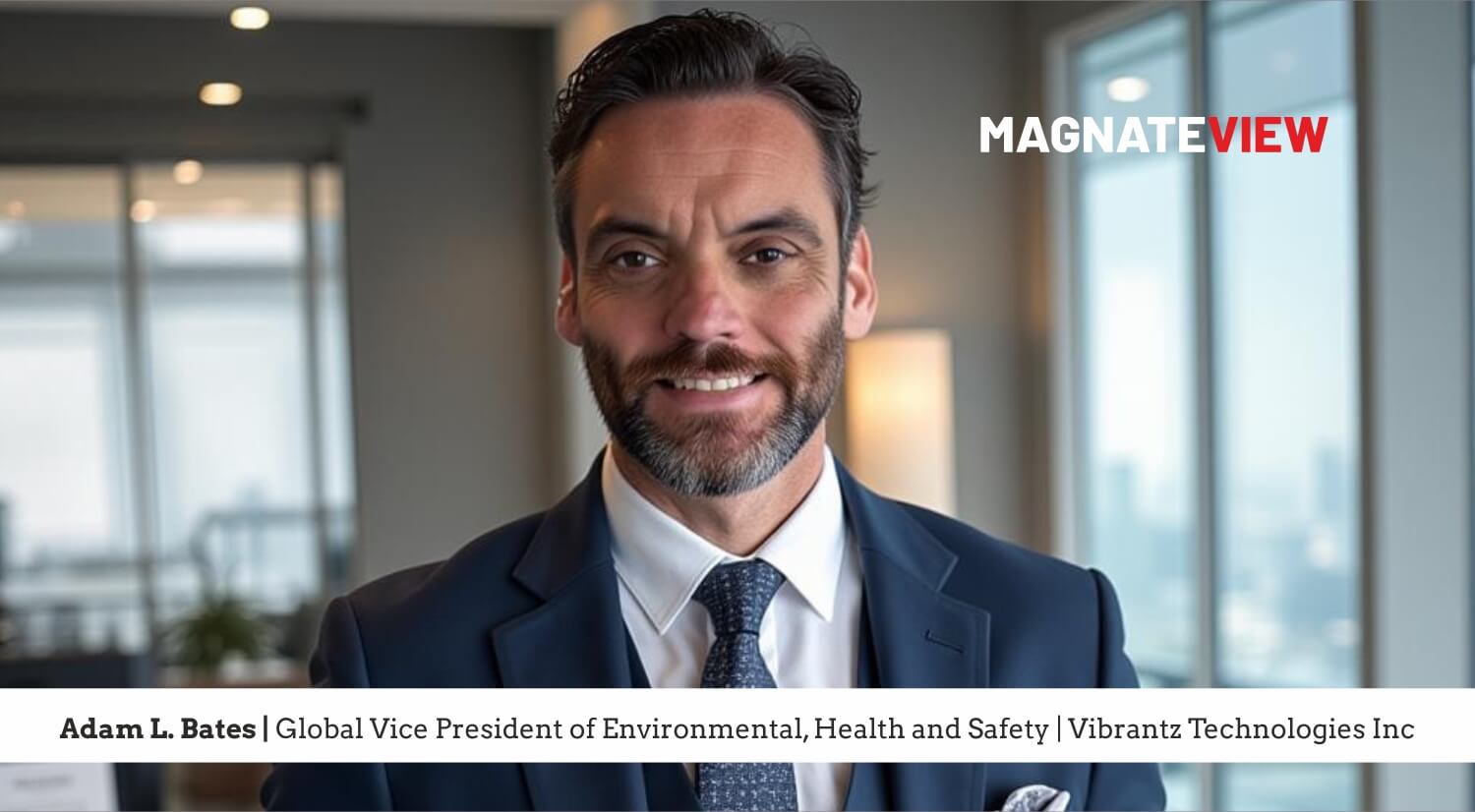

In this interview, we delve into the remarkable story of how Adam L. Bates, Global Vice President of Environmental, Health and Safety at Vibrantz Technologies Inc, embarked on his path to success in the field of environmental and safety leadership. Join us as Adam shares his professional evolution, key experiences, leadership philosophy, and the values that have shaped his global impact. Discover how he balances industrial growth with safety excellence, his perspective on emerging risks such as artificial intelligence, and his vision for the future of environmental and safety governance. Get ready to gain valuable insights from Adam’s journey and his unwavering commitment to keeping environmental, health, and safety deeply personal.
Career Evolution and Commitment to Environmental and Safety Leadership
Adam L. Bates explains that his commitment to environmental and safety leadership was not defined by a single moment or challenge, but rather by a gradual maturation as he evolved in his leadership roles. Throughout his career, he has held various positions that contributed at different levels, and as his responsibilities grew more impactful, he recognized the need for his leadership style to evolve accordingly. This evolution made his work deeply personal. While many organizational functions measure success through numbers, Adam measures success through the real people he impacts daily. Whether it is someone in Detroit, Michigan or Dandenong, Australia, he maintains a conscious effort to keep his work personal, focusing on the names behind the outcomes rather than statistics alone.
Underestimated Environmental, Health and Safety Risks in 2026
Adam believes that artificial intelligence remains one of the most underestimated risks in environmental and safety practices. He acknowledges that AI is here to stay and can be concerning when individuals do not fully understand its consequences and impact. While he does not see AI as a replacement for professionals in the field, he emphasizes its potential to significantly enhance how environmental, health, and safety functions are carried out. He sees this as a unique opportunity for EHS professionals globally to expand their role within organizations and establish themselves as strategic contributors, ultimately securing a stronger position at the decision-making table; a chance to step forward from being a manager to a leader.
Balancing Economic Growth with Safety and Environmental Standards
In addressing the balance between rapid industrial growth and uncompromising safety standards, Adam highlights the importance of a structured approach he refers to as his playbook. Developed over the years, this playbook has enabled significant success across organizations he has been part of. It is designed to be both scalable and dynamic, providing a strong foundational structure upon which organizations can build. Given that environmental, health, and safety functions encompass multiple aspects such as process safety, product stewardship, and compliance, adaptability becomes essential for achieving sustainable success.
Driving Global Impact Through Employee Engagement
Adam emphasizes that one of the most impactful initiatives in any organization is recognizing and appreciating employee contributions. He prioritizes staying connected with teams across global sites, as he believes employees are the most valuable asset of any organization. While there are many strategies to drive engagement, he finds that recognizing success plays a critical role in sustaining progress and motivating teams to continuously improve.
Role of Emerging Technologies in Strengthening Safety Systems
According to Adam, emerging technologies such as artificial intelligence, data analytics, and other innovations play a significant role in enhancing environmental and safety protections. One of their most fundamental contributions lies in improving research efficiency and the practical application of safety measures. He considers AI to be one of the most transformative tools the EHS profession will encounter, but stresses that leaders must actively embrace these technologies. AI helps organizations reduce the gap between expectations and actual practices, creating a dynamic efficiency model that remains effective across industries.
Shifting Stakeholder Perception of Safety as a Strategic Investment
Adam reflects on his experience with organizations that view environmental and safety functions differently. He notes that such perspectives are often aligned with the broader organizational culture. The most successful organizations are those that back their commitments with action and ensure that EHS has a voice in strategic discussions. For him, it comes down to a fundamental principle of integrity, doing what one says they will do. This consistency demonstrates the true value of environmental, health and safety leadership within an organization.
Leadership Principles for Overcoming Resistance
When navigating resistance to environmental or safety reforms, Adam relies on the principles of servant leadership and empathy. He consciously integrates these values into his leadership approach, ensuring that decisions remain people focused. By keeping environmental and safety efforts personal, he avoids reducing progress to mere metrics and instead focuses on the individuals behind those outcomes.
Ensuring Equity and Inclusion in Safety Policies
Adam believes that achieving equity and inclusion in environmental and safety policies requires going beyond compliance. It involves addressing disproportionate risks, removing participation barriers, and acknowledging systemic inequities. He views diversity as a source of perspective, which is essential for effective leadership. Organizations that embrace diverse perspectives tend to be more engaged and reliable, ultimately strengthening their relationships with stakeholders and customers.
Optimism Around Global Environmental and Safety Governance
While Adam does not identify any single regulation or policy as transformative at present, he remains optimistic about the growing influence of artificial intelligence within the EHS profession. He believes that the adoption or rejection of AI will significantly shape both the profession and the organizations it supports. Leaders who embrace AI are already achieving higher levels of efficiency and impact, positioning themselves ahead in an evolving landscape.
Future Skills and Mindset for EHS Leaders
Looking ahead, Adam aspires to create a generational impact within the environmental, health and safety profession, similar to influential leaders who shaped the field in past decades. He emphasizes the importance of investing in emerging talent through universities and professional development. He believes the next generation must be willing to take risks while maintaining accountability and a strong work ethic. Success, he notes, is not immediate but is achieved through persistence and dedication.
Defining Success Beyond Compliance
For Adam, true environmental, health and safety excellence goes beyond regulatory compliance. He identifies engagement as a foundational element of success. This involves ensuring that both employees and the organization are aligned in a shared commitment to safety, with the ultimate goal of sending every individual home safely to their families each day. While such engagement can be difficult to quantify, it reflects his philosophy of keeping environmental and safety efforts deeply personal.
Lessons Learned from Failures and Setbacks
Adam acknowledges that failures and setbacks have played a crucial role in shaping his professional and personal growth. Early in his career, he lacked the experience to fully appreciate these challenges, but over time, he learned to view them as valuable lessons. Rather than identifying a single defining setback, he emphasizes the importance of embracing all challenges as opportunities for growth. He also highlights the role of mentors and leaders in guiding individuals to adopt a positive mindset, helping them see setbacks as opportunities rather than obstacles.
Message to Global Decision Makers
Adam’s message to global decision makers centers on the importance of empathy in leadership. He believes that empathetic decision making will shape the future of environmental, health and safety practices. While technology plays an essential role, leaders must not rely on it alone. Instead, they should integrate it thoughtfully while maintaining a human centered approach. By doing so, environmental, health and safety leaders can ensure meaningful impact across organizations and communities worldwide.
In conclusion, Adam L. Bates’ journey reflects a powerful blend of personal commitment, evolving leadership, and forward thinking vision in the field of environmental, health, and safety. His emphasis on keeping EHS personal, embracing innovation such as artificial intelligence, and fostering a culture rooted in empathy and accountability highlights a leadership style that goes beyond compliance and metrics. As industries continue to evolve, his approach serves as a guiding example of how organizations can achieve sustainable success while prioritizing people, purpose, and long term impact.