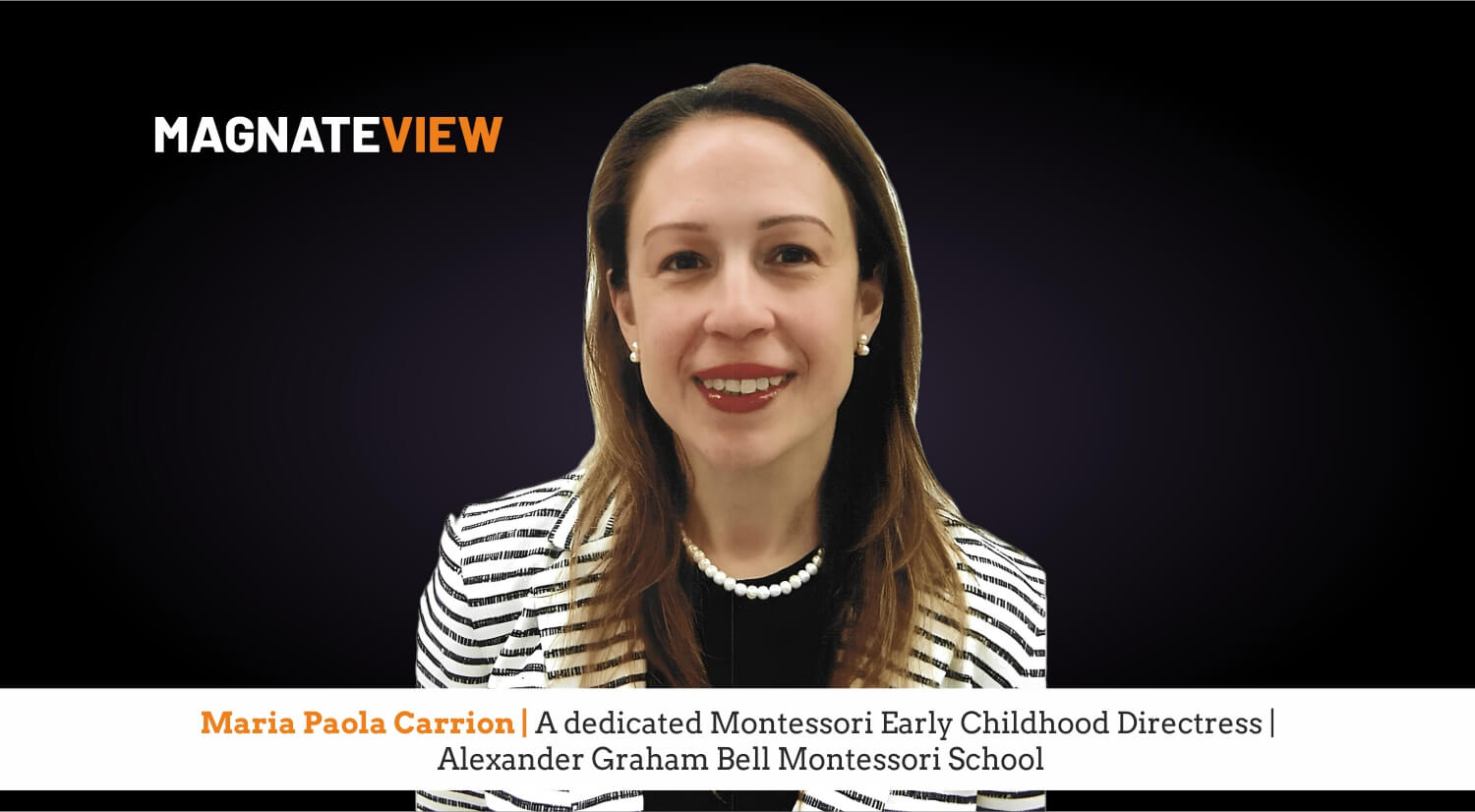
In this exclusive feature, we explore the inspiring story of Maria Paola Carrion, a dedicated Montessori Early Childhood Directress at Alexander Graham Bell Montessori School in Wheeling, Illinois. With over a decade of experience in education, Maria has made remarkable contributions to fostering inclusive learning environments for children who are deaf and hard of hearing. In this interview, she reflects on her professional journey, teaching philosophy, leadership approach, and vision for the future of education. Join us as Maria shares her passion for nurturing young minds, her commitment to continuous growth, and her perspective on the evolving landscape of education in 2025.
Introduction and Career Inspiration
Maria Paola Carrion currently serves as a Montessori Early Childhood Directress at Alexander Graham Bell Montessori School in Wheeling, Illinois. With ten years of experience in education, she also holds the positions of Preschool for All Teacher and Site Director Assistant. Her school specializes in supporting students who are deaf and hard of hearing, an area where Maria’s compassion and expertise shine. She earned her bachelor’s degree in Early Childhood Education from National Louis University, with endorsements in Special Education and ESL.
Throughout her career, Maria has been deeply committed to creating an inclusive, nurturing environment that allows every child to flourish and develop a lifelong love for learning. Beyond her teaching role, she finds joy in photography, capturing moments of connection, nature’s beauty, and the serenity of sunrises and sunsets. The beach, she says, is her ultimate happy place—a source of peace and inspiration.
Maria’s journey into education was inspired by her mother, Galitzia, a retired Montessori teacher with over twenty-five years of experience. Watching her mother’s patience, creativity, and faith in each child’s potential profoundly influenced Maria’s path. Through her mother’s example, Maria came to view education not only as a means of personal growth but also as a powerful force for community transformation.
Defining Success in 2025
For Maria, success is defined by continuous personal and professional growth while making a positive impact on others—especially through education. It is about contributing meaningfully to her community, staying aligned with her values, and maintaining a balanced approach between personal well-being and professional goals. Her definition of success has evolved over time to focus less on external achievements and more on purposeful living and meaningful contribution.
Vision for the Future and Driving Mission
Maria envisions an education system that is inclusive, equitable, and transformative—one in which every child, regardless of background or ability, has access to empowering learning experiences. She actively pursues this vision by expanding her knowledge through ongoing education, volunteer work, and mentorship from experienced educators, including her mother. She believes leadership in education is about empathy, care, and intentional action, values that she embodies in every aspect of her work.
Fostering Innovation and Adaptability
Innovation, for Maria, begins with openness to new ideas and collaboration. She frequently observes classroom dynamics and adjusts her methods to better serve students’ diverse needs. For instance, she often reorganizes her classroom into smaller groups with tailored, differentiated activities. These adjustments have resulted in significant student growth and engagement, reinforcing her belief in the importance of flexibility and creative problem-solving in education.
Building Resilience and Learning from Setbacks
Maria approaches challenges as opportunities for growth. She practices resilience by maintaining a reflective mindset—observing, assessing, and adapting her methods when difficulties arise. Whether working with ESL learners or students with special needs, she strives to remain calm, thoughtful, and child-centered. When faced with setbacks, such as communication barriers, she creatively employs visual cues, gestures, and peer modeling to enhance understanding. These moments not only strengthen her teaching but also deepen her appreciation of Montessori’s philosophy of “following the child.”
Empowering Leadership within the Team
Maria fosters leadership among her colleagues through trust, respect, and open communication. She encourages initiative and collaboration, supporting others in identifying and developing their unique strengths. By modeling calm and compassionate leadership, she helps create a cooperative environment where every voice is valued and every educator feels empowered to grow.
Mentorship and Influential Guidance
A defining mentorship experience for Maria occurred during her Montessori training, when her lead teacher demonstrated the power of quiet, intentional leadership. Rather than directing constantly, her mentor led through observation, trust, and support—values Maria has since embraced in her own leadership style. This experience taught her that true leadership is rooted in humility, patience, and empowering others to discover their potential.
Addressing Global Educational Challenges
Maria identifies educational equity as one of the most pressing global challenges today. She believes that every child, regardless of language or ability, deserves access to quality education. In her classroom, she promotes empathy, respect, and global awareness by integrating cultural studies, sustainability practices, and community service projects. These initiatives help her students develop compassion, curiosity, and a sense of responsibility as global citizens.
The Role of Emerging Technologies
Maria foresees that technologies enhancing observation, documentation, and individualized learning will have a profound impact on Montessori education. Digital tools, when used thoughtfully, can streamline teacher observations, facilitate parent communication, and support personalized instruction—particularly for ESL students and those with diverse learning needs. She emphasizes that technology should complement, not replace, Montessori principles, allowing educators to better follow each child’s natural development.
Embracing Risk and Encouraging Growth
Maria views risk-taking as an essential part of growth and leadership. She embraces calculated risks that test innovative teaching methods or leadership strategies, ensuring they align with Montessori values. By reflecting, collaborating, and evaluating outcomes, she maintains balance while encouraging creativity and adaptability within her team. Her approach underscores the importance of stepping beyond comfort zones to achieve progress and transformation.
Crisis Management and Lessons Learned
Maria approaches crises with composure, organization, and clear communication. During a sudden staffing shortage coinciding with a key classroom event, she quickly assessed the situation, reassigned roles based on individual strengths, and maintained stability for the children. Her ability to remain calm and decisive ensured that learning continued uninterrupted. This experience reinforced the importance of teamwork, adaptability, and maintaining a child-centered perspective even during uncertainty.
Fostering Well-being and Positive Work Culture
Maria prioritizes her team’s well-being by nurturing an inclusive and supportive environment. She encourages open dialogue, collaborative planning, and shared decision-making. Peer observation and constructive feedback are integral to her leadership approach, helping educators grow together while maintaining trust and respect. Rooted in Montessori values, her workplace culture emphasizes empathy, patience, and shared purpose.
Self-Reflection and Continuous Growth
As a reflective leader, Maria consistently evaluates her actions and seeks feedback to refine her approach. She engages in professional development through workshops, training, and journaling—tracking her progress and insights along the way. This commitment to reflection helps her model a growth mindset for both colleagues and students, demonstrating that learning is a lifelong process.
Achievements and Milestones
Among her proudest accomplishments is the successful implementation of inclusive Montessori programs tailored for ESL learners and children with special needs. By designing personalized learning experiences, Maria ensures that each child receives the support they need to thrive. She has also mentored new teachers, guiding them toward greater confidence and leadership within the Montessori framework. Watching her students and colleagues grow has been one of the most fulfilling aspects of her career, reaffirming her dedication to excellence and her passion for education.
In conclusion, Maria Paola Carrion’s journey exemplifies dedication, compassion, and purposeful leadership in education. Her unwavering commitment to inclusivity, continuous learning, and holistic development reflects the very essence of the Montessori philosophy. Through her work at Alexander Graham Bell Montessori School, she continues to inspire both students and fellow educators to embrace curiosity, empathy, and perseverance. As she looks to the future, Maria remains devoted to shaping an educational landscape where every child can thrive, learn with joy, and reach their fullest potential.