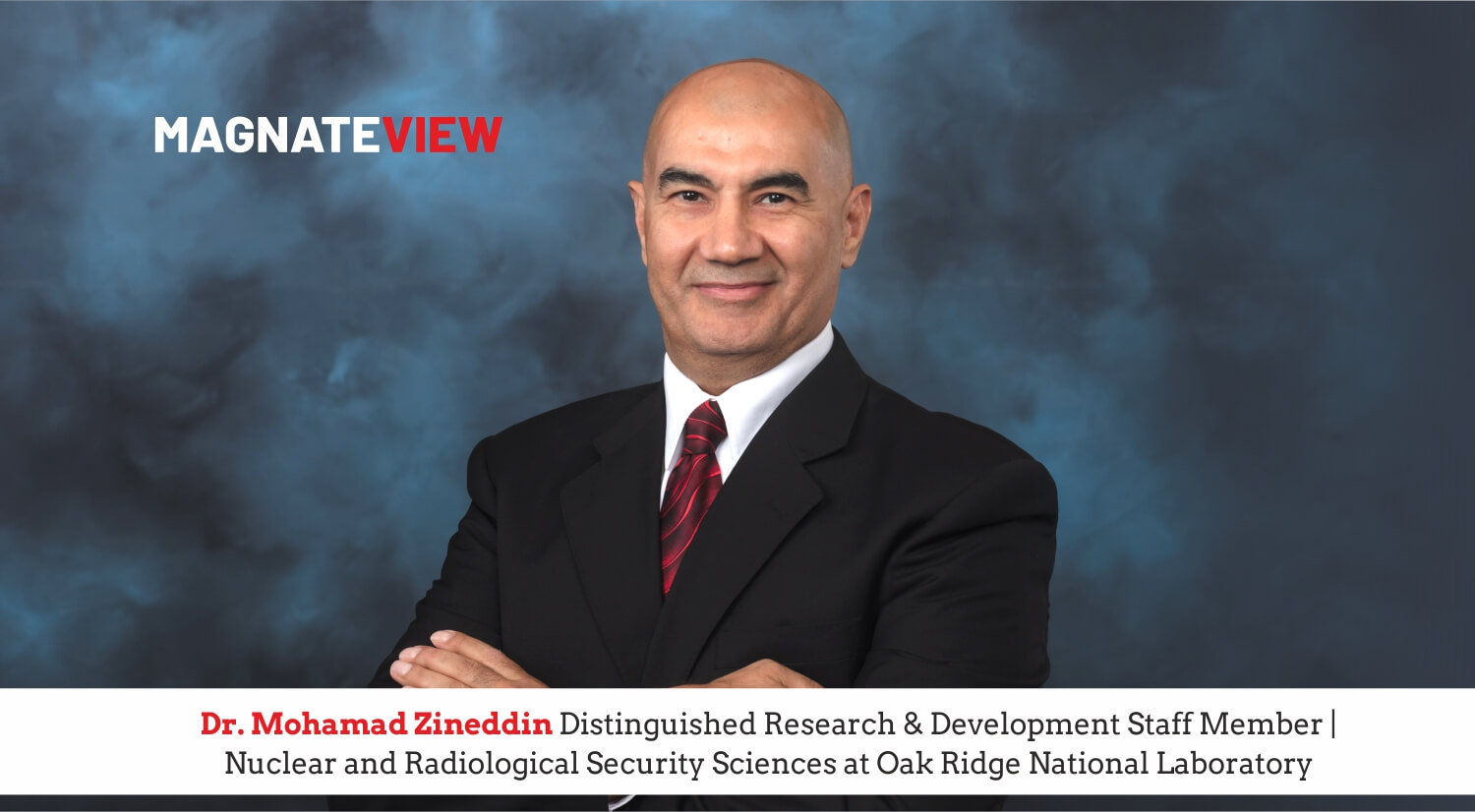
In this interview, we delve into the remarkable story of how Dr. Mohamad Zineddin, Distinguished Research and Development Staff Member in Nuclear and Radiological Security Sciences at Oak Ridge National Laboratory, embarked on his path to success in the world of science, engineering, and national security. Join us as Dr. Zineddin shares his experiences, leadership philosophy, and groundbreaking contributions to nuclear security. Discover what drives his mission, how he fosters innovation and resilience, and what defines his vision for the future. Get ready to be inspired by Dr. Zineddin’s journey and his unwavering commitment to advancing technology, collaboration, and global security.
Introduction and Career Inspiration
Dr. Mohamad Zineddin, known professionally as Dr. Z., serves as a Distinguished Research and Development Staff Member in Nuclear and Radiological Security Sciences at Oak Ridge National Laboratory (ORNL). He earned his Bachelor of Science in 1994, Master of Science in 1996, and Doctorate in 2002 from Penn State University in Civil and Structural Engineering. Between 2014 and 2023, he was the founding manager of the Security Education and Training Department at the Emirates Nuclear Energy Corporation (ENEC) in Abu Dhabi, United Arab Emirates. From 2011 to 2014, he co-founded and led the Institute for International and Civil Security and served as a Professor of Practice at Khalifa University, where he also held the role of Founding Chair of the Department of Civil Infrastructure and Environmental Engineering. His tenure at Khalifa University highlighted his ability to merge academic excellence with practical applications and to enhance the institution’s reputation in engineering education. Before these roles, Dr. Zineddin served at the United States Air Force Academy as a Professor of Structural Engineering and Director of Research and Development. His professional passion lies at the intersection of engineering, science, and national security, with a focus on protecting critical infrastructure and advancing nuclear energy security. He is deeply driven by the pursuit of innovative solutions that enhance resilience, safety, and reliability in the systems that sustain modern society.
Defining Success in 2025
For Dr. Zineddin, success has evolved from being outcome-oriented to being purpose and impact-driven. Early in his career, he defined success through measurable achievements, such as completing projects and advancing scientific milestones. Today, however, his vision of success extends beyond individual accomplishments to encompass sustainable impact—advancing technologies and systems that strengthen national security, protect critical infrastructure, and empower future generations of scientists and engineers. In the fast-evolving landscape of 2025, he views success as fostering collaboration, integrity, and innovation across multidisciplinary teams. His perspective has matured from “What have I achieved?” to “What lasting value have we created, and how have I helped others succeed?”—a philosophy that continues to guide his professional fulfillment.
Vision for the Future and Mission
Dr. Zineddin’s vision is rooted in creating a future where innovation and collaboration drive sustainable progress in technology, education, and societal systems. His current work at Oak Ridge National Laboratory aligns seamlessly with this vision by focusing on safeguarding critical facilities and developing next-generation nuclear energy security systems. His mission is guided by integrity, transparency, and innovation, emphasizing that access to opportunities and tools should not be dictated by circumstance. What sets him apart in his field is his ability to integrate deep technical knowledge with practical experience, transforming complex concepts into actionable frameworks that deliver measurable impact.
Fostering Innovation and Adapting to Challenges
For Dr. Zineddin, fostering innovation begins with cultivating a culture of curiosity, collaboration, and interdisciplinary exploration. He encourages his teams to question assumptions, explore new technologies, and connect insights across fields. A notable example of innovation came during a project focused on enhancing nuclear facility resilience through advanced sensor technologies. When emerging cybersecurity concerns arose, he pivoted the team’s approach to integrate AI-driven anomaly detection and secure communication protocols. This adaptation required retraining models, collaborating with cyber experts, and reimagining deployment strategies. The result was a robust, future-ready system that demonstrated the power of agility and collaboration in scientific research.
Building Resilience and Turning Setbacks into Opportunities
Dr. Zineddin believes resilience begins with perspective, preparation, and balance. When faced with challenges, he prioritizes clarity, reflection, and feedback. During one project, an unexpected scope change jeopardized deadlines, but rather than viewing it as a failure, he used it as a learning opportunity. By reorganizing priorities and empowering his team, the project not only succeeded but also enhanced the team’s problem-solving capabilities. This experience reaffirmed his belief that obstacles can be catalysts for growth when approached with composure and adaptability.
Empowering Leadership within Teams
Empowering others, according to Dr. Zineddin, is about recognizing individual strengths and granting meaningful ownership of responsibilities. He believes in providing guidance without micromanaging, celebrating success, and allowing space for learning from mistakes. This approach fosters confidence and leadership within his teams, cultivating a collaborative and accountable environment where everyone feels valued and motivated to contribute.
Mentorship and Its Impact on Leadership
One of Dr. Zineddin’s most formative mentorship experiences occurred early in his career when a senior leader empowered him to take ownership of critical decisions during a high-stakes project. Instead of giving direct answers, his mentor guided him through thoughtful questioning, which strengthened his judgment and strategic thinking. This experience profoundly influenced his leadership style—he now mentors others by providing direction while encouraging autonomy and creativity. He believes the best leaders are those who nurture growth in others, not just direct outcomes.
Addressing Global Challenges
Dr. Zineddin identifies economic inequality, technological disruption, and geopolitical instability as among the most pressing global challenges. To address these, he has established mentorship programs that expand educational and career opportunities, tackling economic disparities. He also develops advanced physical security systems that counter both traditional and emerging threats, ensuring that solutions are scalable, ethical, and sustainable. His approach underscores the necessity of collective action and innovation in solving global problems.
Emerging Technologies Shaping the Future
Dr. Zineddin believes that generative AI will be one of the most transformative technologies in the coming years. Beyond text generation, he foresees AI systems capable of producing realistic images, videos, and synthetic data, revolutionizing industries by accelerating innovation, automating processes, and enabling specialized, intelligent assistants.
The Role of Risk-Taking in Leadership
For Dr. Zineddin, effective leadership requires comfort with uncertainty. He acknowledges that some of his most rewarding initiatives stemmed from taking calculated risks. The key, he explains, is preparation, transparency, and adaptability. By modeling thoughtful risk-taking, he encourages his team to act boldly and innovate responsibly—balancing ambition with diligence.
Crisis Management and Response
Crisis management, in Dr. Zineddin’s view, begins with preparation and communication. At Oak Ridge National Laboratory, his teams maintain clear protocols, designated response units, and regular crisis simulations. In a crisis, he focuses on rapid fact-finding, transparent communication, and composure—ensuring his team feels supported and aligned in responding effectively.
Fostering Employee Well-Being and Positive Work Culture
Dr. Zineddin prioritizes the well-being and satisfaction of his team through connection, growth, and balance. He promotes open communication, conducts feedback sessions, and recognizes achievements. He invests in continuous learning opportunities such as mentorship programs and professional workshops. Additionally, he supports work-life balance through flexible schedules, hybrid work options, and wellness initiatives that include mental health days and fitness reimbursements. By fostering transparency, collaboration, and respect, he ensures a workplace where employees feel valued and empowered to excel.
Continuous Self-Reflection and Growth
Dr. Zineddin engages in consistent self-reflection by reviewing his leadership decisions weekly and seeking feedback from colleagues. He invests in continuous professional development through reading, courses, and mentorship. Most importantly, he translates reflection into action by setting tangible goals and measuring progress, ensuring ongoing personal and professional growth.
Significant Achievements and Milestones
Throughout his distinguished career, Dr. Zineddin has received numerous honors for his contributions to nuclear security and engineering. He was listed in Who’s Who in America (2024–2025) for his professional achievements and was the recipient of the prestigious Roger Howsley Award for Excellence in Nuclear Security, presented jointly by the World Institute for Nuclear Security (WINS) and the Institute of Nuclear Materials Management (INMM). In 2019, he received the Barakah Nuclear Power Plant Excellence Award in the managerial category for his commitment to fostering a culture of nuclear security excellence. These recognitions stand as a testament to his leadership, dedication, and lasting impact on the global scientific community.
In conclusion, Dr. Mohamad Zineddin’s journey is one of purpose, innovation, and unwavering dedication to advancing the frontiers of science and security. His ability to bridge academic knowledge with practical application has enabled him to make meaningful contributions to nuclear security and global safety. Through his visionary leadership, he continues to inspire collaboration, resilience, and intellectual curiosity among his peers and the next generation of scientists. His story reflects a lifelong pursuit of excellence and a steadfast belief that true success lies not only in achievements but in the lasting impact one creates for others and for the world.